

Warning: CC, CISSP - Domain 2, and Security+ essential topic.
Every company in the world collects data, and for many, it is the most important asset they have.
Customer records, employee contracts, financial reports, internal emails.
Most people assume someone is protecting it properly.
But if there is a good rule to live by for cybersecurity experts: Assumptions kill security.
If you're studying for a cybersecurity cert right now, like this post! You're not alone.
The problem is that the moment you start talking about data protection, everybody starts talking about encryption and tools.
But which tool you are going to use in your organization isn’t that important.
The first question you should focus on is:
Which data actually needs protection, and how much?
That question is what data classification answers.
And if you’re studying for the CISSP, Security+, or just trying to understand how security programs actually work, this concept is something you need to understand deeply.
Here is what you can expect to learn from this article:
Why data classification exists and what it actually is
The classification levels used in government and business, and how they differ
How the whole process of data classification works
How classification connects directly to access control, compliance, and incident response
Everything you need to know for the certification exams
If this is something you want to learn more about, just keep reading!
Why Data Classification exists
I like describing concepts with specific examples, because it allows people to tie them down to real situations and imagine them better.
After all, cybersecurity is supposed to solve real-world problems. We are far beyond academic debates that have no real impact.
So, imagine a hospital.
They have patient records. Financial reports. Internal memos. A lunch menu for the cafeteria.
All of that is “data.” But not all of it needs the same level of protection.
If someone leaks the cafeteria menu, no real harm is done.
If someone leaks a patient’s HIV diagnosis, lives can be destroyed, laws are broken, and the organization faces massive consequences.
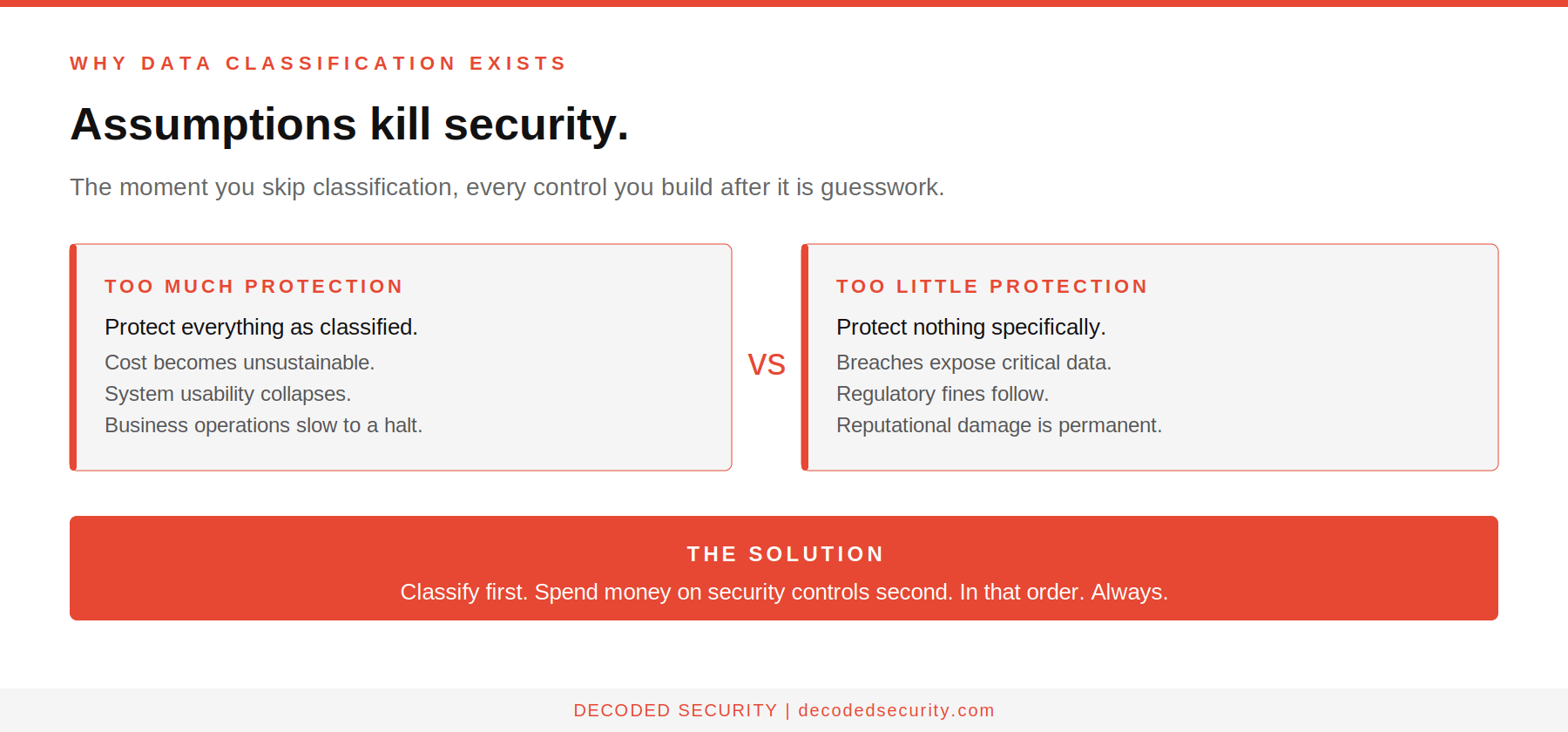
So the first option would be to protect everything as classified. Well, that would probably mean your business won’t survive. The cost would be too high. The usability of the systems would be very low.
In other words:
Too much protection on everything is expensive and slows everything down. Too little protection on the wrong data leads to breaches, regulatory fines, and reputational damage.
Data classification is the solution. It forces you to think before you protect and spend your money efficiently.
Are you interested in data security concepts? Give this article a like and help me create more free content for our community!
What Data Classification Actually Is
Data classification is the process of categorizing data based on its sensitivity and the potential impact of its loss or unauthorized disclosure.
Simple definition. But the implications are huge.
When you classify data properly, you unlock the ability to:
Apply the right controls to the right data (not the same controls to everything)
Meet compliance requirements like GDPR and HIPAA
Enforce least privilege access: people only see what they need to see
Respond to incidents faster because you already know what was at risk
Prevent loss of essential data by understanding what actually matters and implementing the right security controls
Classification is not a technical control. It is a foundational decision that makes all your technical controls work properly.
If you skip classification, your security program has no basis.
Remember: Classify first, then spend money on security controls!
PII and GDPR are inseparable on the CISSP exam. If you know one, you need to know the other. Here's the breakdown:

Two Data Types You Must Know
Before we get to classification levels, there are two types of sensitive data that appear constantly in cybersecurity certifications for one simple reason.
Those two types are highly regulated, and if anything goes wrong, your company will pay the price.
So, which data are so special?
Personally Identifiable Information (PII): Any information that can identify a specific individual. Name, social security number, date of birth, biometric records, and home address.
Protected Health Information (PHI): Any health-related information tied to a specific person. This is covered under HIPAA in the US, and mishandling it carries serious legal consequences.
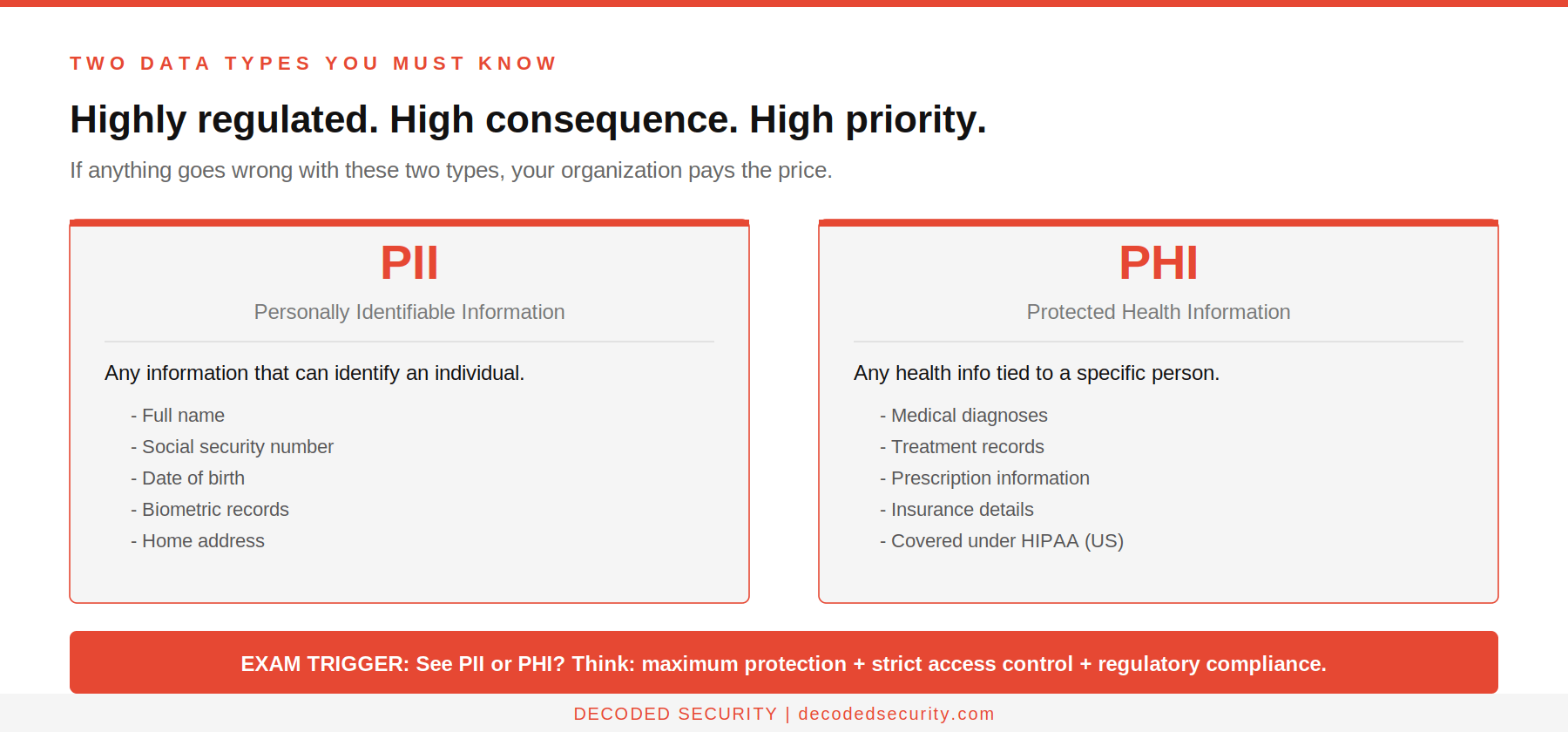
Both are high-sensitivity data by definition. They require the strongest classification levels and the tightest controls.
If you see either of these in an exam question, your brain should immediately think: maximum protection, strict access control, regulatory compliance.
The Classification Levels
Organizations classify data differently depending on whether they operate in the public or private sector. But the underlying logic is the same:
The more damage unauthorized disclosure can cause, the higher the classification level.
Here is how the two scales map against each other:
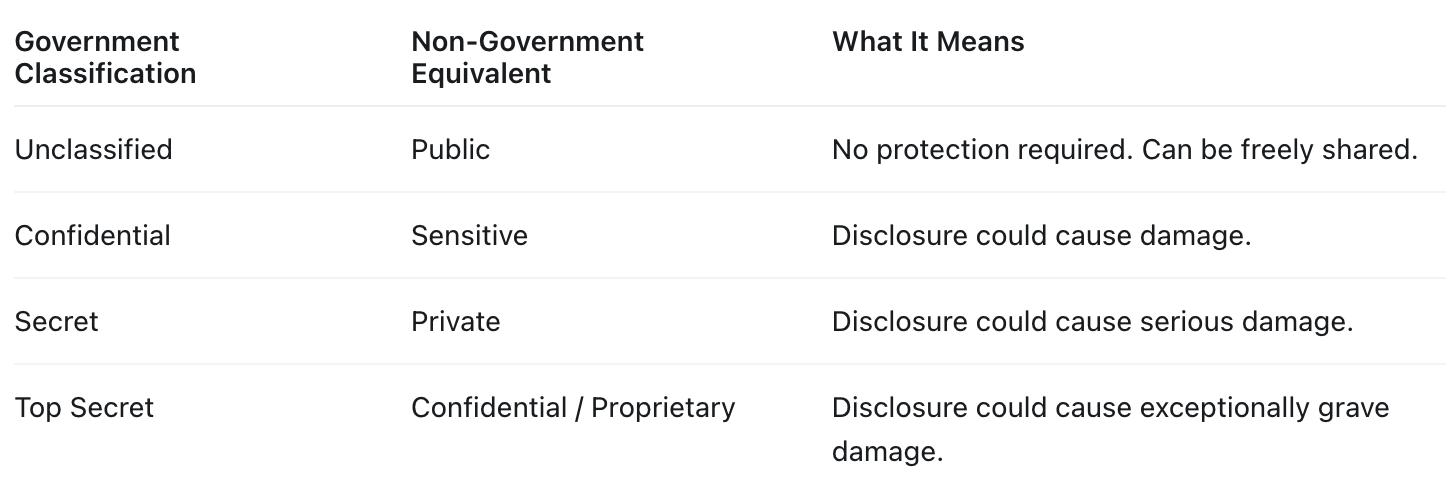
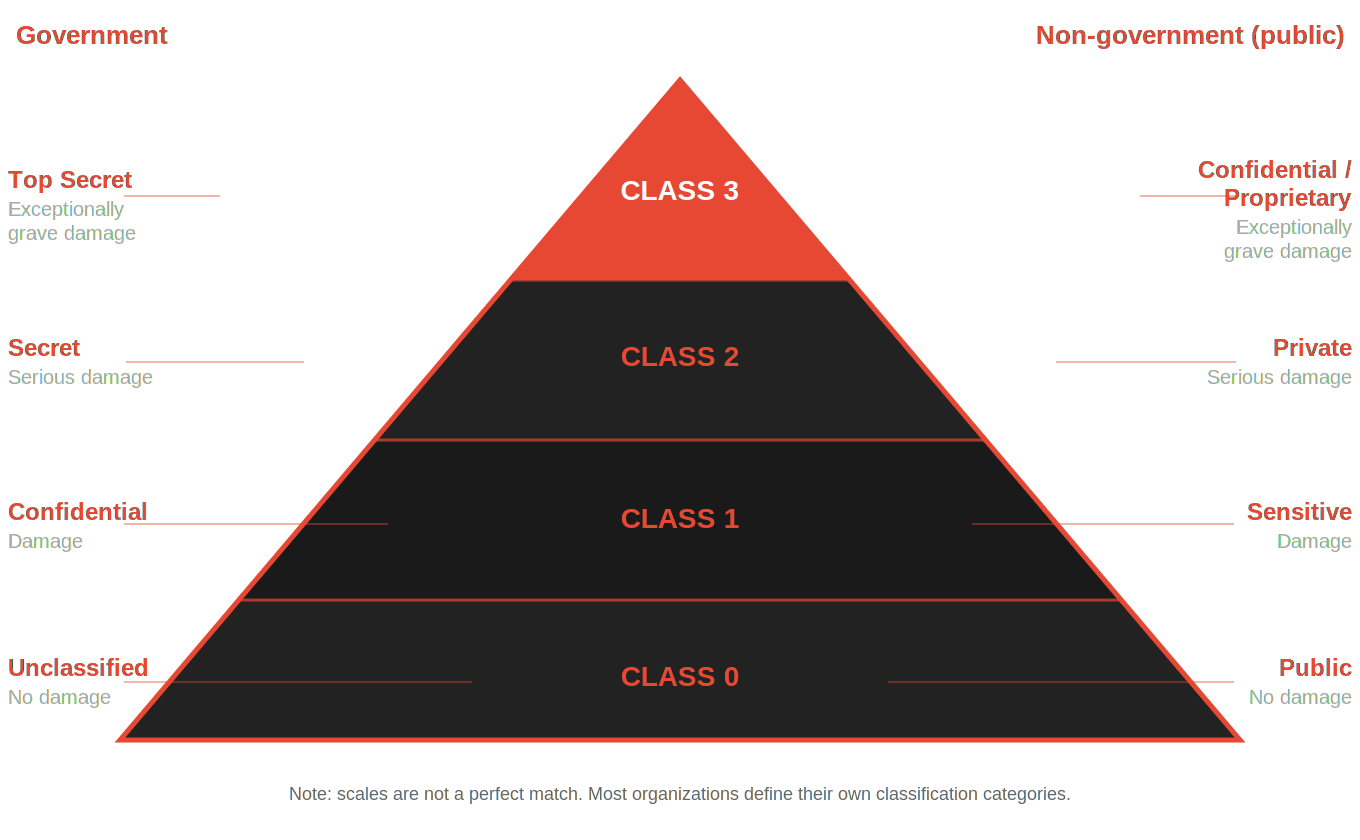
Remember that non-government organizations can use data classification categories of their own creation, tailored to meet their specific needs.
But these categories are the ones you’ll need for the CISSP exam.
Okay, now you know the levels.
But that is only half the picture. The other half is understanding the process that gets you there.
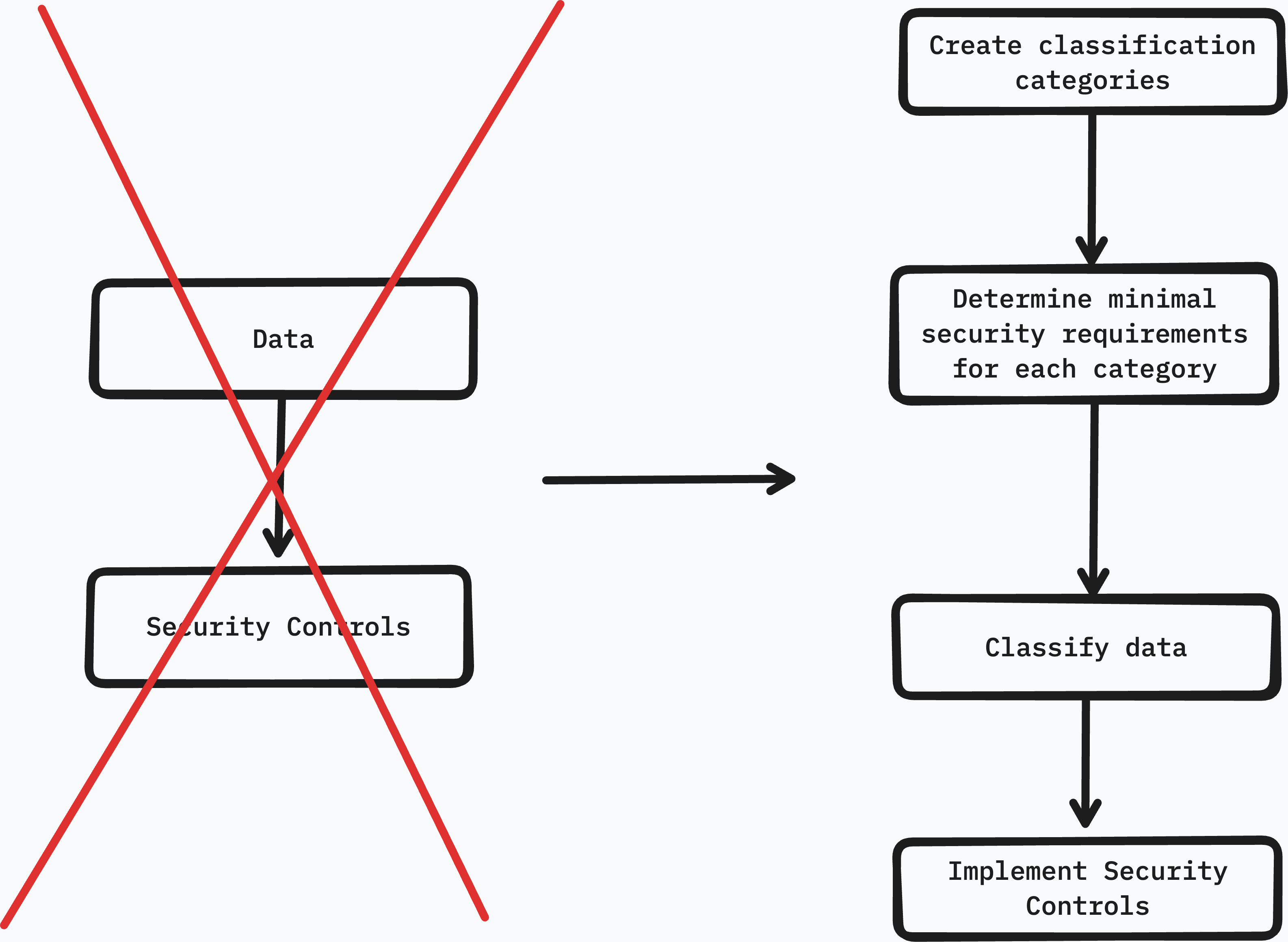
Most organizations follow four steps:
Create classification categories
Define the levels your organization will use. Public, Internal, Confidential, Restricted. Or whatever labels fit your context. The names matter less than having a consistent, documented scheme everyone understands.
Determine minimum security requirements per category
For each classification level, define the baseline controls that must be applied. What encryption is required? Who is allowed access? How long is the data retained? This is where classification turns into actionable policy.
Classify the data
Go through your data and assign the appropriate label based on sensitivity and potential impact. This step requires input from data owners, not just the security team. The people who create and use the data understand its value better than anyone.
Implement security controls
Now you spend money. Apply the controls defined in step two to the data classified in step three. Encryption, access restrictions, DLP policies, monitoring rules. Everything flows from the classification decision made in the previous steps.
The order matters. You do not buy tools and then figure out what you are protecting. You classify first, then implement.
How Classification Connects to Everything Else
Up until now, you might get a feeling that the whole thing is just an administrative exercise.
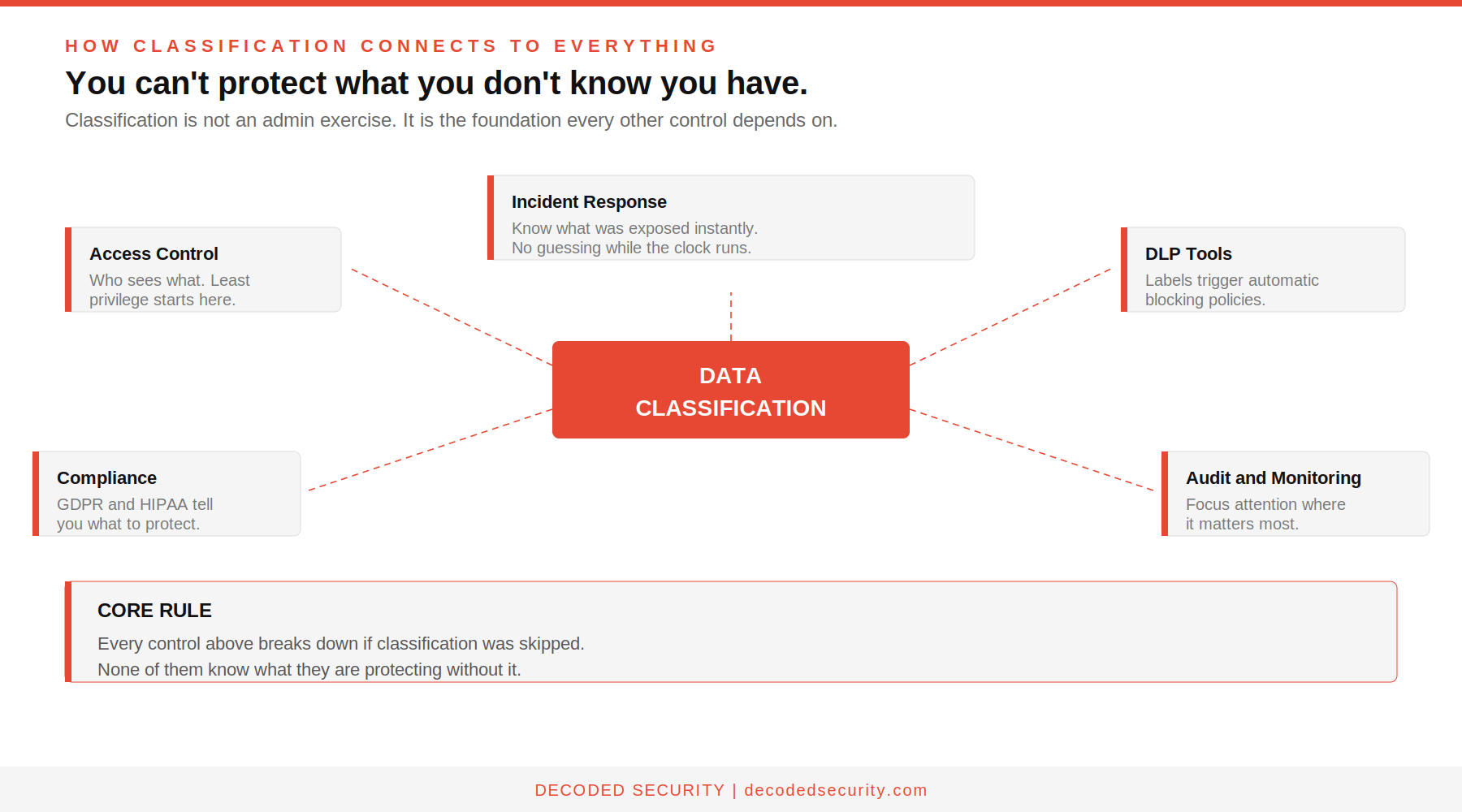
But it isn’t. It is the foundation of any good security program.
Let me give you a couple of examples:
Access Control: Once data is classified, you can define who is allowed to see it. You cannot enforce least privilege without knowing what you are protecting.
Compliance: Laws like GDPR and HIPAA require you to handle certain data in specific ways. Classification tells you which data falls under which regulations.
Incident Response: When a breach happens, you need to know immediately what was exposed. Classified data means you already have that answer. Unclassified data means you are guessing while the clock runs.
Data Loss Prevention (DLP): DLP tools use classification labels to automatically apply policies. If a file is labeled “Restricted,” the system can block it from being emailed externally. Without labels, DLP cannot do its job.
Audit and Monitoring: Classification tells your monitoring systems which data needs the most attention. You cannot watch everything equally. Classification tells you where to focus.
See? You can’t implement proper security controls if you don’t know what you’re protecting.
Conclusion
I hope that after reading this article, you won’t just remember - Public, Sensitive, and Private…but you will actually take it as an essential part of a security program.
I know that many cybersecurity professionals ignore this step, because it isn’t “technical” enough.
But the reality is that you can’t protect what you don’t know you have. So don’t take it as wasted time, but as an investment that will actually help you implement efficient security controls.
Looking to go deeper on data security? Start with these:
And if you are still deciding which cybersecurity path makes the most sense for your goals, start with the career path guide.
Let’s Connect
If you want to collaborate, discuss, or just geek out over networking and cybersecurity, reach out:
Email: erich.winkler@decodedsecurity.com
LinkedIn: Erich Winkler
Gumroad community: Decoded Security
Start Here: Decoded Security Roadmap
Enjoyed this article? Like it or drop a comment. I’d love to hear your thoughts and questions!
Let’s learn and grow together!