

Here’s something wild: A company in San Francisco collecting email addresses from a marketing campaign can be fined up to €20 million or 4% of annual global revenue (whichever is greater) by European regulators.
Why?
Because three of those email addresses belonged to people from Berlin.
Welcome to GDPR, the regulation that doesn’t care where you are.
It cares where your users are located.
And that’s the reason why it became so important for companies all over the world and the CISSP exam. It’s the backbone of modern privacy law, and the exam loves testing it. Miss the nuances here, and you’re leaving points on the table.
Preparing for the CISSP exam?
Check out my free materials to help you prepare efficiently!
The good news is that in the next couple of minutes, I will show you the core principles of this privacy law, so you won’t miss a single question.

The GDPR Superpower: Extraterritorial Reach
Most regulations stop at borders. GDPR?
It follows the data.
If you process personal information of EU residents, even if your servers are in Texas, your office is in Tokyo, and you’ve never set foot in Europe, GDPR applies to you.
This global reach is precisely why the CISSP exam continually references it.
It’s not just a European thing.
It’s the privacy framework security professionals need to know worldwide.
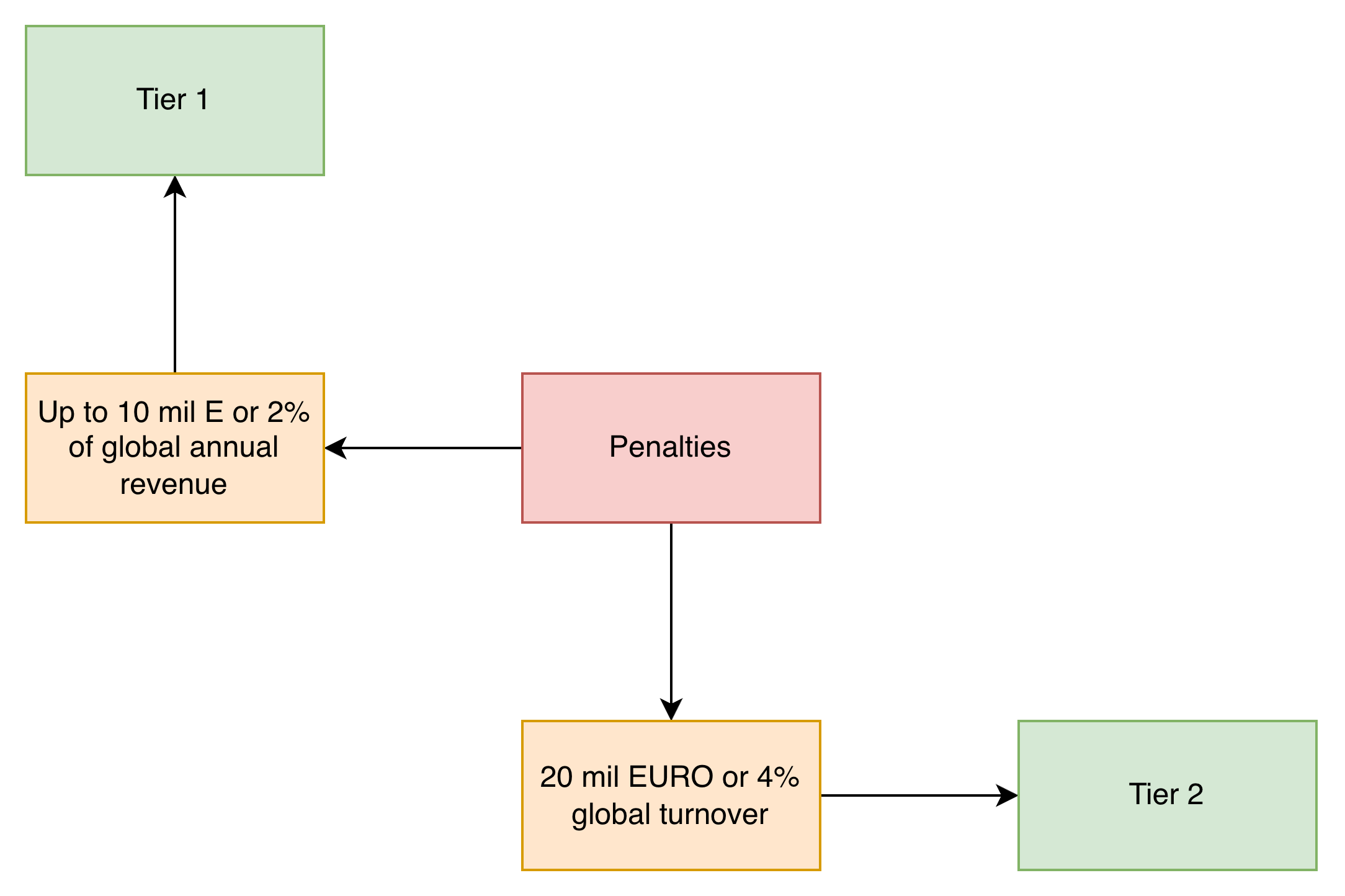
What Exactly Is “Personal Data”? (Hint: It’s More Than You Think)
GDPR protects Personal Data, defined as:
Any information that can directly or indirectly identify a natural person.
Sounds simple, right? But the problem is that the definition is very general.
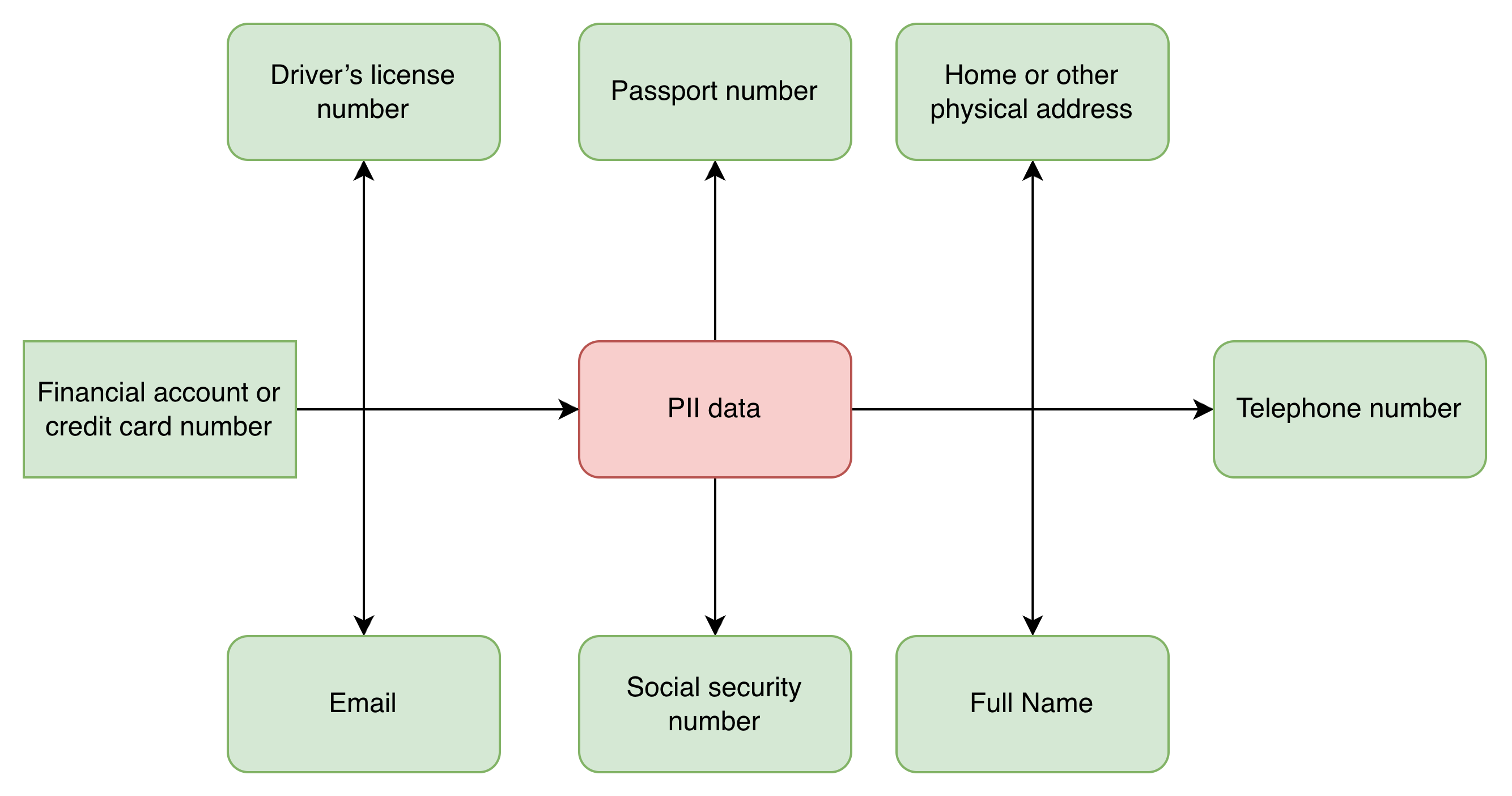
Obviously personal:
Name, email, phone number
Social security numbers
Home address
Not-so-obvious (but still under GDPR):
IP addresses
Cookie identifiers
Device IDs
Location data
Behavioral profiles
CISSP exam tip: When in doubt, GDPR treats more things as “personal data” than most other frameworks. Remember that.
The Seven Rights Every Citizen Has (And Every CISSP Candidate Must Know)
This is where Domain 1 questions get specific.
You need to know not just what these rights are, but when they apply and what they don’t cover.
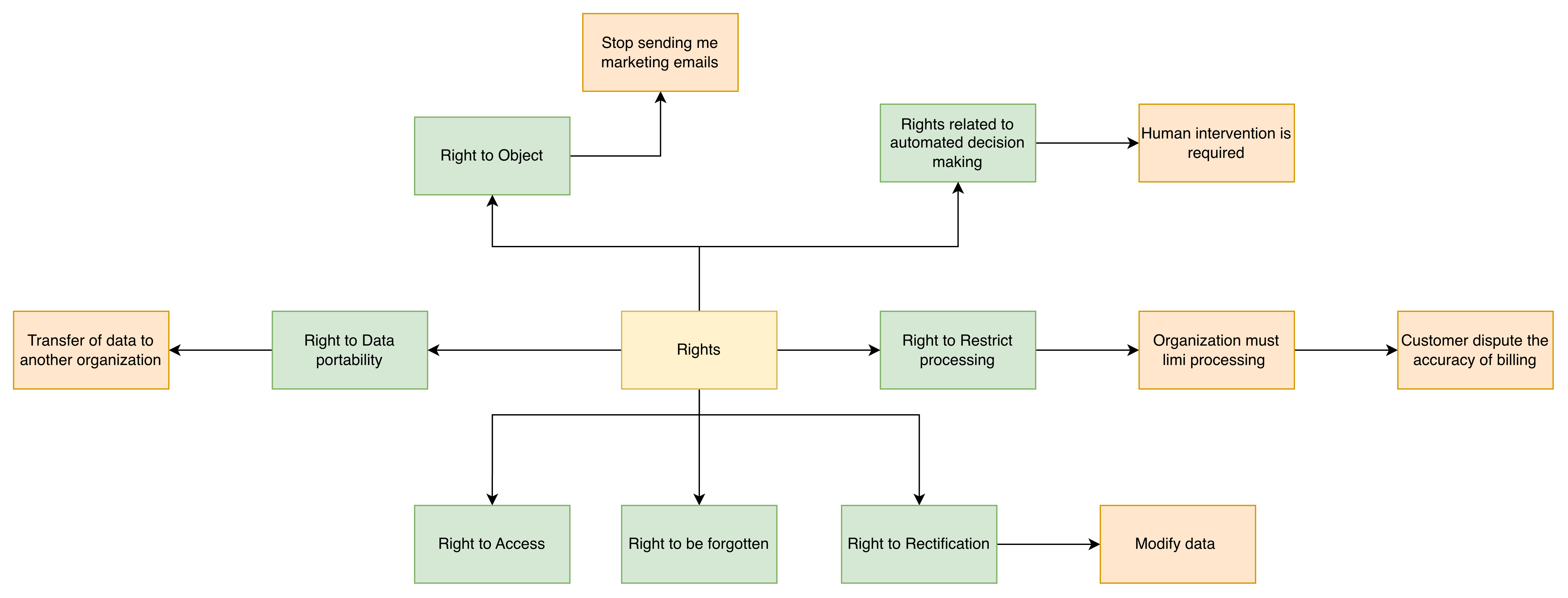
1. Right to Access
“Show me everything you have on me.”
Citizens can demand:
Confirmation that you’re processing their data
A copy of that data
An explanation of how you’re using it
You can think of it as the “data transparency report card.”
2. Right to Rectification
“That’s wrong. Fix it.”
If someone’s data is inaccurate or incomplete, they can demand corrections.
Simple, but mission-critical for data quality.
3. Right to Erasure (The “Right to Be Forgotten”)
“Delete everything about me.”
This is quite simple. Any EU citizen has the right to say: Delete everything you know about me.
However, this right isn’t absolute. Legal obligations (like tax records) override it.
A classic exam trap: don’t assume “erasure” always means “delete immediately.”
4. Right to Restrict Processing
“Stop using my data, but you can keep it for now.”
Processing must pause under certain conditions (like accuracy disputes), but you can still store the data.
5. Right to Data Portability
“Give me my data in a format I can take elsewhere.”
Users can request their data in a structured, machine-readable format and move it to another service.
Example: Switching from one social media platform to another with all your posts intact.
6. Right to Object
“I don’t want you doing that with my data.”
People can object to:
Direct marketing (always)
Profiling
Processing based on “legitimate interest”
7. Rights Related to Automated Decision-Making
“A robot can’t make life-changing decisions about me.”
With AI everywhere, this right is becoming huge. Citizens can:
Avoid decisions made solely by algorithms
Demand human review
Challenge automated decisions
Example: A loan denied purely by an algorithm? The applicant has the right to human intervention.
GDPR Roles: Who’s Responsible for What?
As always in cybersecurity, we need to assign responsibilities. Because if everyone is responsible, no one is.
That’s why GDPR defines roles, and whether you are preparing for the CISSP exam or you’re just learning about privacy laws, this is what you need to know about each role.
Data Controller
Decides the “why” and “how” of data processing
Holds primary legal responsibility
Must ensure compliance
Example: The e-commerce company collects customer orders
Data Processor
Processes data on behalf of the controller
Follows the controller’s instructions
Can be held liable too
Example: The cloud hosting provider storing those orders
Internal Governance Roles:
Data Owner
Senior manager with authority over the data
Decides who gets access
Business Owner
Owns the business process that uses the data
Ensures the process aligns with compliance
Data Custodian
The IT person managing the technical infrastructure
Handles backups, security controls, and integrity
Data Steward
Oversees data quality and policy compliance
User
Anyone accessing data within their authorized role
Exam trap alert: Don’t confuse Controller vs. Processor with internal roles. Controllers and Processors are external legal relationships. The others are internal organizational roles.
The Magic Number: 72 Hours ⏰
Let’s talk about the number that shows up in so many CISSP questions:
Organizations must notify the supervisory authority within 72 hours after becoming aware of a breach that may risk individuals’ rights and freedoms.
If the risk is high, you also notify the affected individuals, with no delay.

Pro tip: When you see a breach notification question, your brain should instantly scream “72 HOURS!” Do not overthink it!
Want the Complete Domain 1 Roadmap?
GDPR is just one piece of the Security and Risk Management topics.
If you want a structured way to master Domain 1 of the CISSP exam, I’ve created something for you.
My CISSP Domain 1 Checklist provides clarity and focus on everything that truly matters for the exam and real-world practice.
➡️ Download it here and stop wasting time on scattered study materials.
Conclusion: Data Belongs to the Individual, Not the Organization
If you’re reading this, congratulations! You just made your first step in understanding one of the most complex privacy laws there is!
The core principle of the GDPR regulation is quite clear. The data belongs to the individual, not the organization.
As CISSP professionals, we’re not just protecting systems. We’re supposed to protect people’s right to privacy.
Get this right, and you’re not just passing an exam. You’re stepping into the role security leadership actually needs: someone who understands that compliance isn’t a checklist, it’s a responsibility.
Thanks for writing this, it clarifies a lot, and it's truly fascinating how GDPR's extraterritorial reach makes it such a vital backbone for global data privacy, realy quite a powerful concept.