
Decoded Security helps beginners and career switchers understand how cybersecurity actually works, for interviews, certificates, and real-world roles.
This isn’t about memorizing terms or collecting random resources.
It’s about learning:
What matters
What doesn’t
How security professionals are expected to think
If you want clarity, structure, and realistic guidance, you’re in the right place.
Career Path: Break into cybersecurity with a clear plan
If your goal is to land your first cybersecurity job, this is for you.
Cybersecurity Fundamentals: The 10 Concepts That Get You Through 90% of Interviews [FREE]
Most beginners fail interviews for one reason:
They study everything except the fundamentals that actually matter.
This guide focuses on the 10 concepts that appear again and again in:
• cybersecurity interviews
• certification exams
• real-world security work
You can read it in about 3 hours.
But the clarity it gives you will save months of confusion.
Inside the guide, you’ll learn:
• The CIA Triad
• The Data Security Lifecycle
• Risk Management Fundamentals
• Networking Basics
• Cryptography Basics
• Identity & Access Management
• Incident Response
• Governance & Security Policies
• Security Control Types
• Cloud Security Basics
👉 Download the Cybersecurity Fundamentals Guide (FREE)
Cybersecurity Interview Cheat Sheet: 3 Simple Techniques to Sound Like a Pro (Even as a Beginner) [FREE]
A quick-reference guide you can review before any interview.
Learn three simple techniques that instantly make you sound more structured, confident, and professional, even if you’re a beginner.
👉 Download the Cybersecurity Interview Cheat Sheet
The 90-Day Cybersecurity Job Blueprint: Land Your First Cybersecurity Job in 90 Days
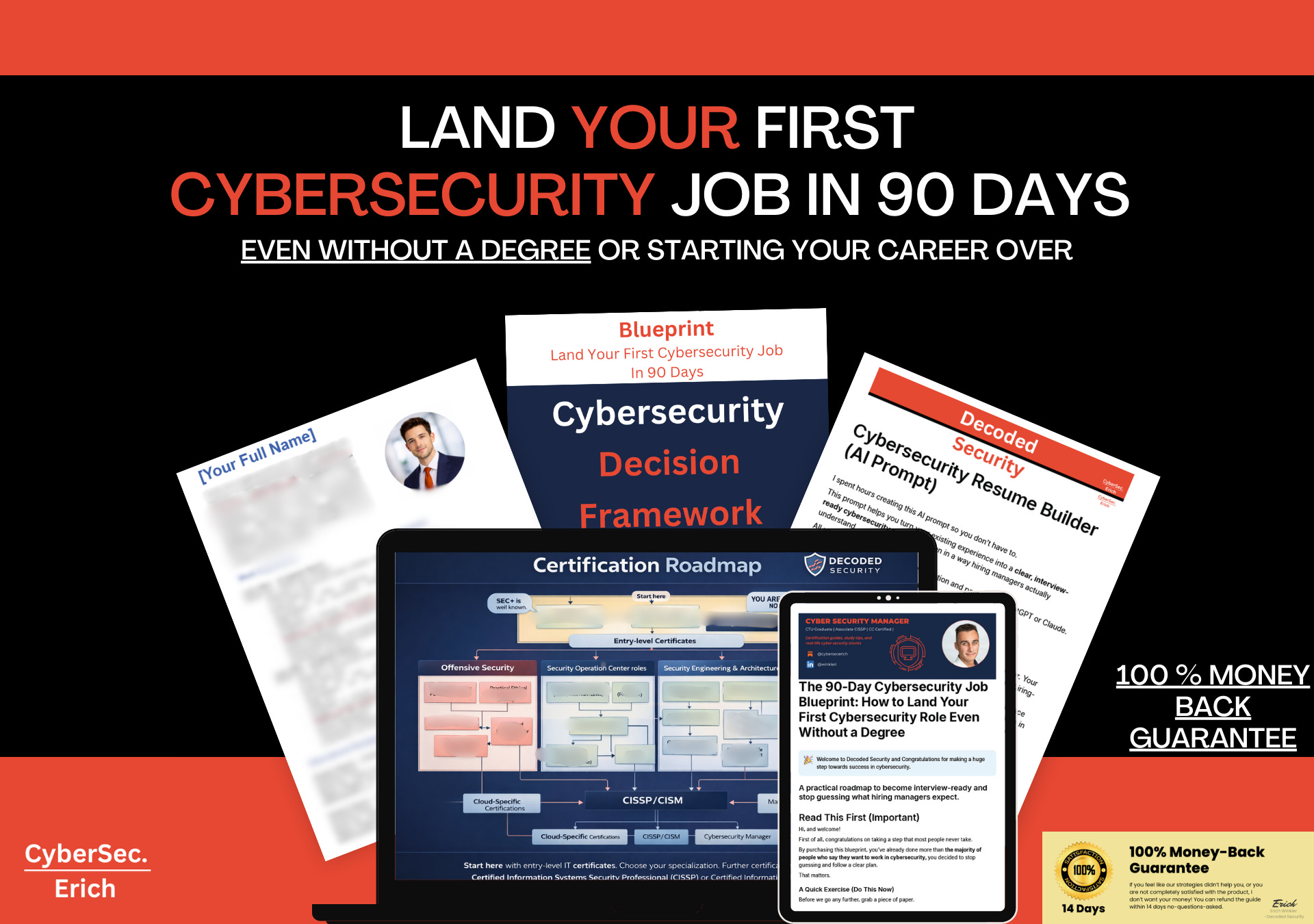
A practical, step-by-step plan designed for beginners and career switchers.
You’ll learn how to:
Choose a realistic cybersecurity direction
Prepare only for what actually gets interviews
Build a believable resume
Walk into interviews with confidence
👉 Download the 90-Day Job Blueprint
🐧 Linux for Cybersecurity: Hands-On in Under 60 Minutes (FREE)
If you want to learn Linux and don’t know where to start… this is it.
This beginner-friendly guide shows you how to create your own safe Linux environment and start using real commands in under one hour — without installing Linux or risking your computer.
Many beginners don’t struggle because cybersecurity is too hard.
They struggle because they never get hands-on experience.
This guide gives you that experience.
In under 60 minutes.
For free.
What you’ll learn
What containers and virtualization are (simple explanation)
How to install Docker
How to create and run your own Linux container
How to connect to the Linux terminal
How to safely exit and restart anytime
How to practice essential Linux commands used in cybersecurity
This is not theory.
You will:
👉 Create a working Linux environment
👉 Use real commands
👉 Interact with the terminal
👉 Practice a realistic cybersecurity scenario
By the end, you’ll have real experience — not just knowledge.
What you’ll be able to do after
Run Linux safely on your computer via Docker
Use the terminal with confidence
Understand core commands
Practice investigation-style tasks
Remove one of the biggest barriers to getting hired
No prior Linux knowledge required.
👉 Download the Linux Guide
CISSP Materials (Advanced)
1. CISSP Domain 1 Checklist – Security & Risk Management (FREE)
Struggling to make sense of Security and Risk Management?
This free checklist gives you a clear, structured roadmap for CISSP Domain 1, helping you focus on what really matters, both for the exam and real-world application.
This checklist is perfect for:
CISSP candidates who want to study smarter, not harder
Cybersecurity professionals looking to refresh the fundamentals
Beginners who need a structured roadmap to start learning
No fluff. No filler. Just a step-by-step guide to mastering the fundamentals of cybersecurity.
👉 Download your free checklist now
2. CISSP Domain 1: Security & Risk Management - Complete Guide
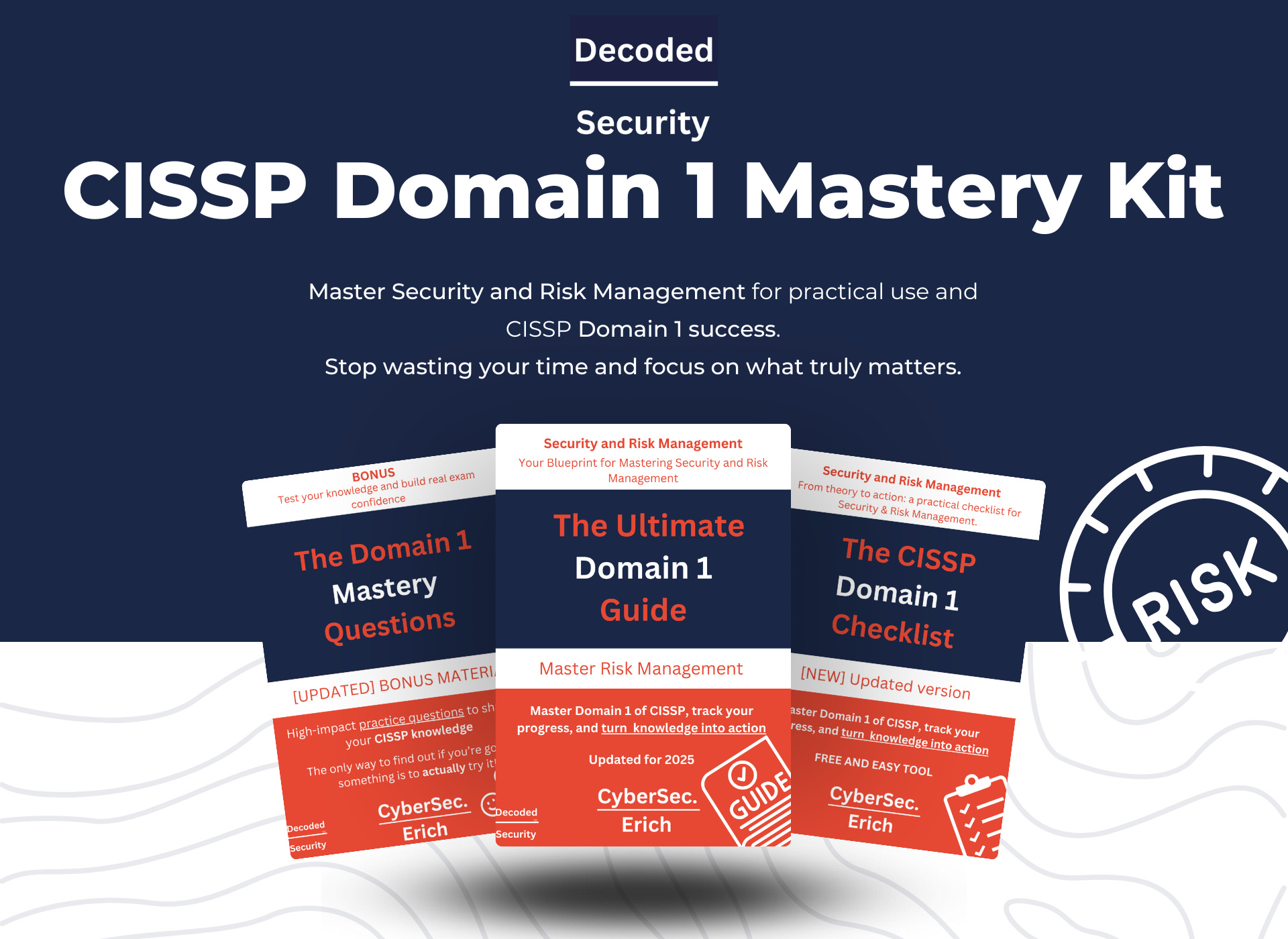
This guide teaches you how CISSP expects you to reason and make decisions, not just recall facts.
You’ll learn:
How CISSP frames risk, governance, and responsibility
Why are some answers “better” than others
How to reduce subjectivity in scenario-based questions
👉 View the complete CISSP Domain 1 guide
3. CISSP Domain 3: Security Architecture and Engineering - Complete Guide
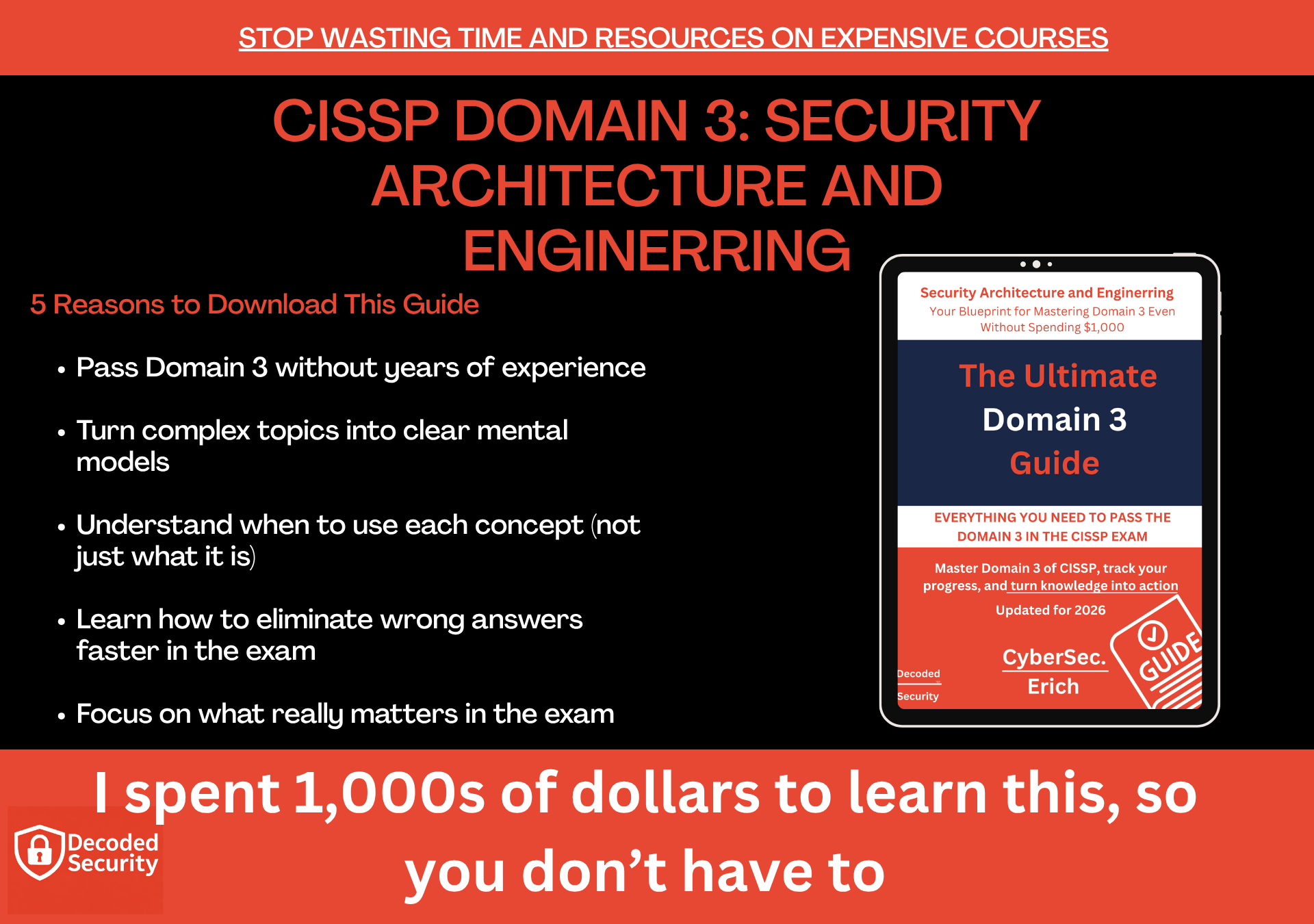
👉 View the complete CISSP Domain 3 guide
Get updates & exclusive resources
Want to stay on top of the latest free tools and guides?
Subscribe to Decoded Security and get exclusive resources delivered straight to your inbox.