

Some of the smartest engineers I know fail the CISSP exam on their first attempt.
Meanwhile, managers with a fraction of their technical knowledge pass.
You might be wondering... why is that?
Are managers that much smarter than engineers?
Of course not..
But because they’re trained in one specific skill that most engineers are never forced to learn.
The uncomfortable pattern
If you talk to people who’ve taken CISSP, you’ll hear this sentence a lot:
“I understood the material, but the answers felt… wrong.”
This reaction comes up most often among strong engineers.
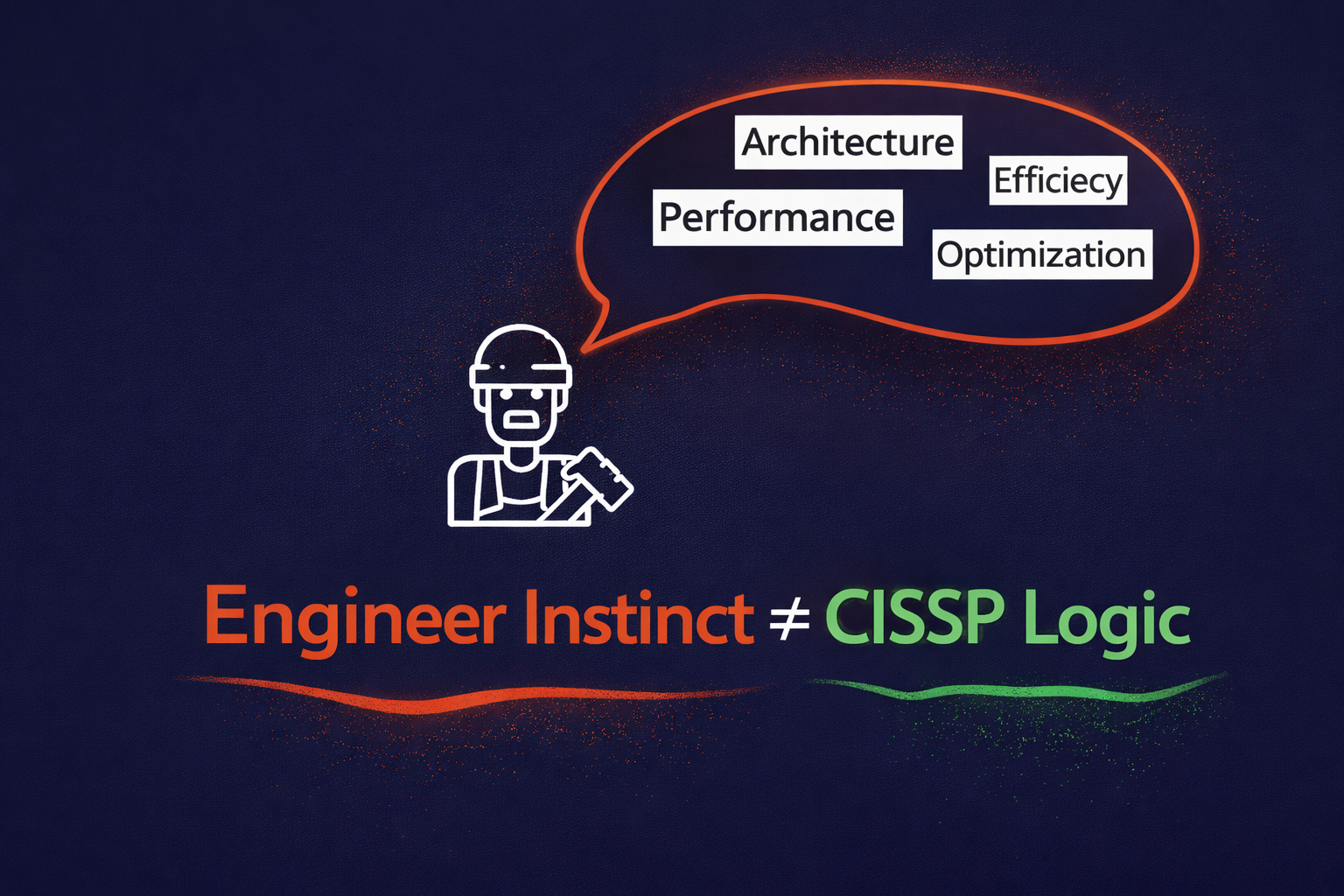
People who:
design complex systems
solve hard technical problems
optimize for efficiency, performance, and elegance
are used to being right
And yet, on CISSP, that instinct becomes a liability.
So what is the problem? Is the CISSP exam designed wrong?
Engineering thinking vs. CISSP thinking
Of course not
The exam simply tests something else.
So here is the message: Having a good technical knowledge isn’t enough for the CISSP. You need to understand the mindset!
The good news? I’ll show you how!
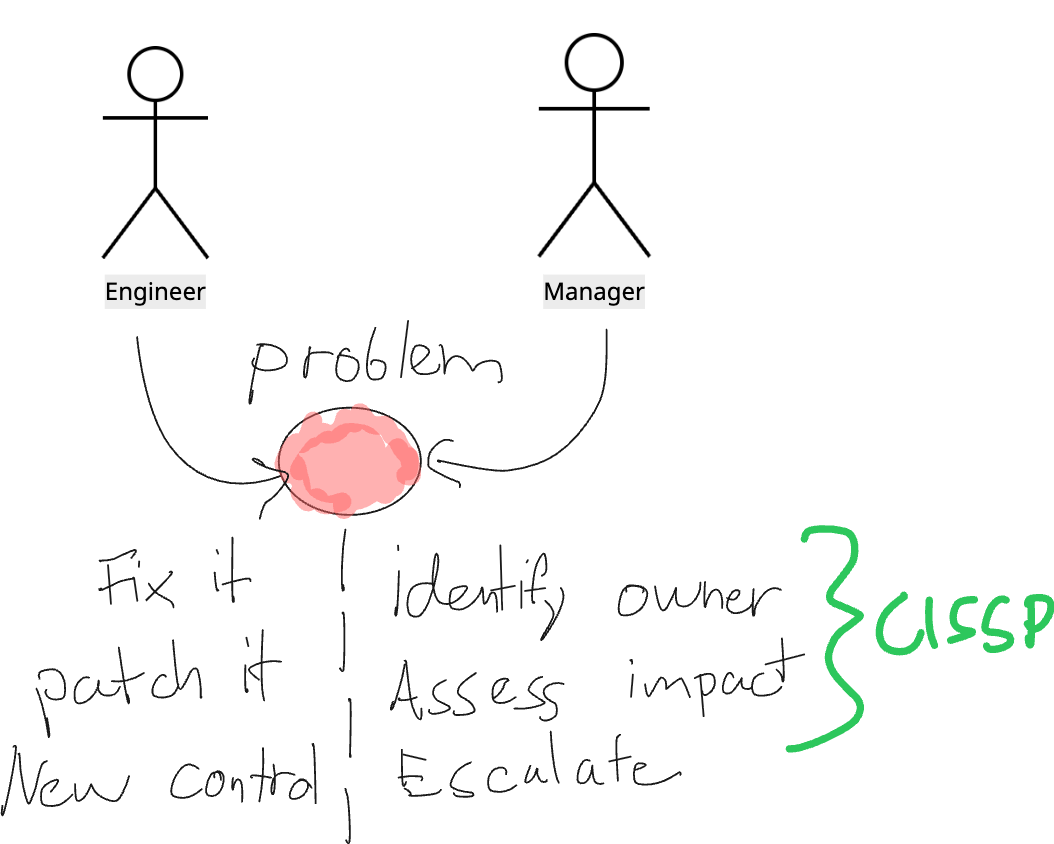
Engineers are trained to ask:
What’s the fastest fix?
What’s the most efficient solution?
How do we eliminate the root cause?
How do we prevent this from ever happening again?
These are excellent questions, inside an engineering context.
CISSP asks a different set of questions:
Who owns the risk?
Who is accountable if this fails?
Is this decision defensible after an incident?
What survives audits, regulators, and legal review?
That is the gap where many engineers stumble.
Do you see that problem now?
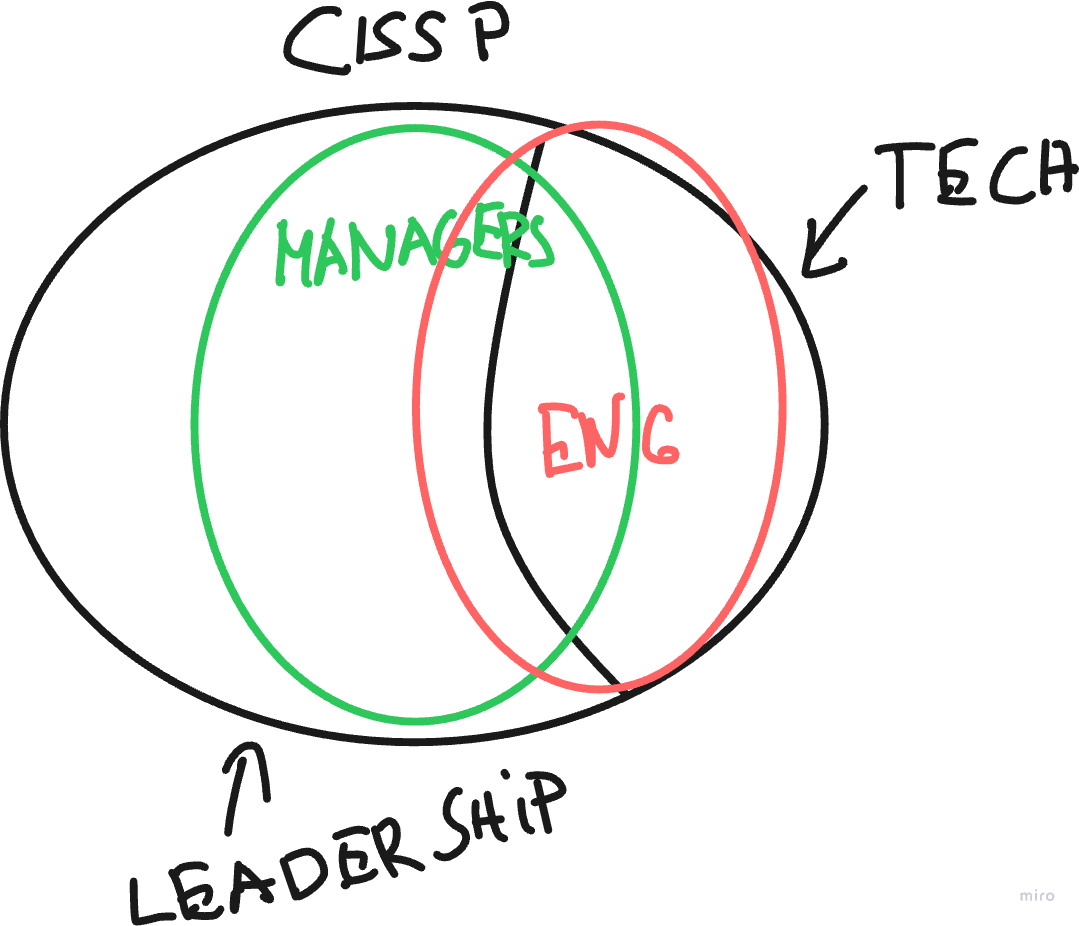
While managers often lack technical knowledge, they understand business decisions and managing risks. And that’s what gives them an advantage here.
Why managers often do better
Managers aren’t necessarily more knowledgeable about security.
Let’s face it, they usually aren’t. (( Sorry for hurting your ego ))
But they are trained to think in terms of:
responsibility
trade-offs
acceptable loss
organizational impact
They’re used to making decisions where:
Multiple answers are “technically fine”
But only one is politically, legally, and operationally survivable
CISSP rewards that way of thinking.
Not because it’s more “correct”, but because it reflects how security failures are judged in real life.
If you’ve taken the CISSP (or are preparing for it),
I’m curious which part felt most “wrong” to you.
Why this feels unfair (and isn’t)
From an engineering perspective, CISSP can feel:
vague
conservative
bureaucratic
even irrational
And I can understand it completely. After all, I’ve been there. But you need to understand that when systems fail, nobody asks:
How elegant the architecture was
How optimized the solution looked on paper
They ask:
Who approved this
What risk was accepted
whether that decision was reasonable at the time
CISSP trains you for that conversation.
The real mindset shift
Passing CISSP isn’t about becoming less technical.
It’s about learning when technical correctness stops being the main goal.
The CISSP mindset is this:
Security decisions are judged by their consequences,
not by how smart they looked when they were made.
Conclusion
Am I saying engineers shouldn’t go for the CISSP exam?
Absolutely not!
Am I saying managers are smarter than engineers?
Absolutely not!
Here is the message I am trying to tell you:
CISSP isn’t a technical exam.
It’s an exam about judgment.
It tests whether you caxn make decisions that still make sense after something breaks.
That doesn’t make engineers worse candidates.
But it does mean technical excellence alone isn’t enough.
And that’s the mindset shift most people miss.
So the first question you should answer before taking an exam is: Do I want to apply for positions where this kind of strategic thinking is required?
If the answer is yes, I am here to help, regardless of your background.
All you need to do is hit that subscribe button and let me know in the comments!
Let’s connect
If you want to collaborate, discuss, or just geek out over virtualization and cloud security, reach out to me:
Email: erich.winkler@decodedsecurity.com
LinkedIn: Erich Winkler
Enjoyed this article? Like it or drop a comment. I’d love to hear your thoughts and questions!
Let’s learn and grow together!
Ready to level up your cybersecurity skills?
💬Comment below and tell me what your experience with SLAs is
❓Take the quiz to test your understanding: CybersecErich: Quiz Hub
📰Subscribe (free or paid) to get new posts straight to your inbox.
Share this with a friend studying for CISSP, or anyone curious about cybersecurity