

If you're serious about understanding networking and cybersecurity, or preparing for certifications like the ISC2 Certified in Cybersecurity (CC), this is essential knowledge.
Hello Everyone,
I want to follow up on my last post about the theoretical ISO/OSI model and move on to the TCP/IP model. A practical model that addresses specific challenges and powers the network communications as we know them today.
What is the TCP/IP Model?
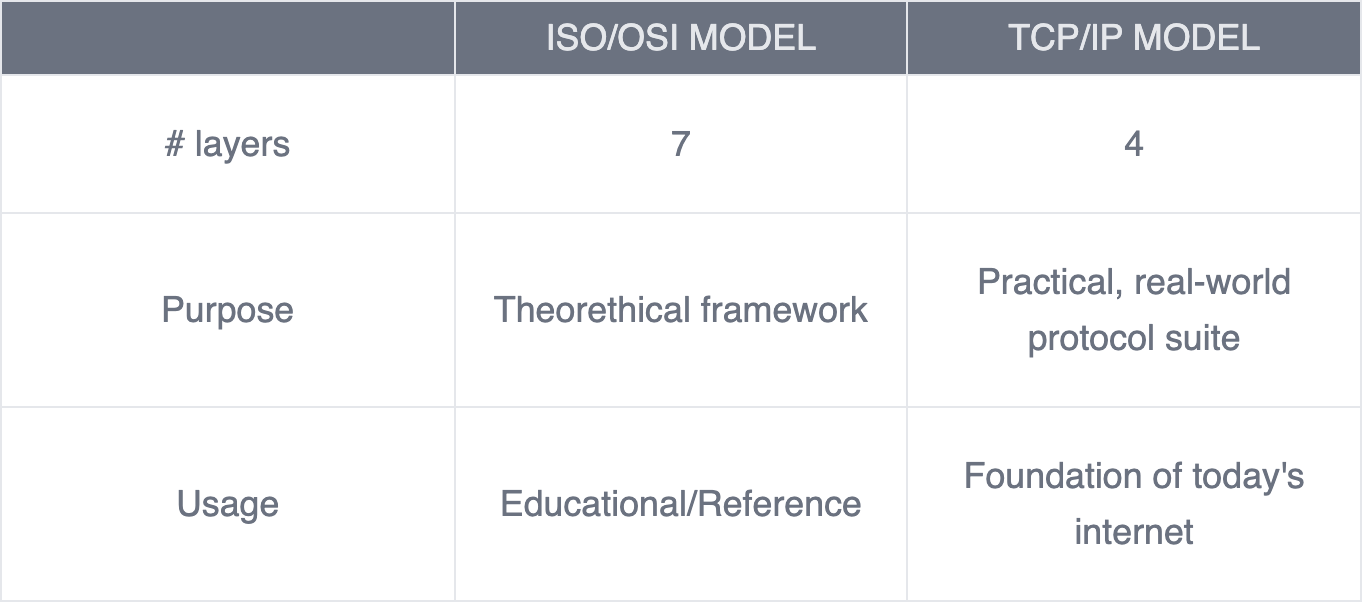
The Transmission Control Protocol/Internet Protocol (TCP/IP) is a simplified, practical framework for network communications and a core of today’s internet. It defines how data is transmitted over a network and ensures reliable communication between devices. Unlike the OSI model, which is a theoretical model, TCP/IP was designed for real-world usage, which is why it was widely adopted.
Layers of the TCP/IP Model
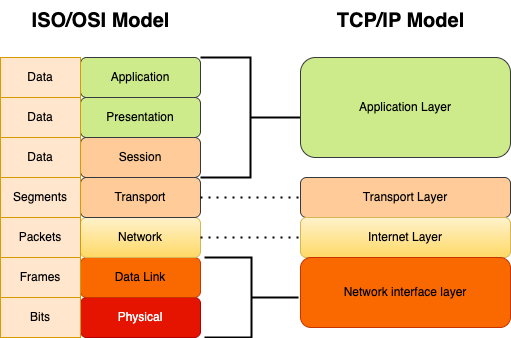
1. Link Layer (Network Interface Layer)
Handles physical transmission over the network.
Includes network hardware, like Ethernet and Wi-Fi.
2. Internet Layer
Corresponds to the OSI’s Network layer
Defines protocols that are responsible for the logical transmission of data over the network
IP addressing and routing
Example protocols: IP, ICMP, ARP.
3. Transport Layer
Provides reliable or fast transmission between two devices.
Handles error checking and data flow
Example protocols: TCP (reliable), UDP (fast, no guarantee).
4. Application Layer
Interface for user applications.
Protocols here allow apps to communicate over a network.
Example protocols: HTTP, FTP, SMTP, DNS.
Why Does the TCP/IP Model Matter?
It is the protocol suite that runs the Internet today.
Every cybersecurity professional must understand how TCP/IP traffic flows, how protocols interact, and where vulnerabilities might occur.
It's crucial for passing certifications like ISC2 CC, CompTIA Network+, and Security+.
Key takeaways
The TCP/IP model was designed to solve real-world communication problems, unlike the theoretical ISO/OSI model. Since it is widely used all over the world, it’s become something that any cybersecurity specialist needs to understand perfectly, including the related protocols.
Here is a list of things that you need to know about this topic:
It consists of four layers: Link, Internet, Transport, and Application.
Each layer has its own purpose
TCP/IP powers the internet today, making it critical for anyone in IT, networking, or cybersecurity to understand.
Knowing how TCP/IP works helps you analyze traffic, troubleshoot network issues, and spot vulnerabilities effectively.
It is essential for passing certifications like ISC2 CC, CompTIA Network+, and Security+.
Understanding TCP/IP gives you a practical foundation to build more advanced networking and cybersecurity skills.
Next up: We'll explore key TCP/IP protocols (like TCP, IP, UDP, ICMP) and understand how they work!