

📘 Essential for anyone preparing for the ISC2 CC exam
What is a Certification Authority?
A Certification Authority (CA) is a trusted organization that issues digital certificates.
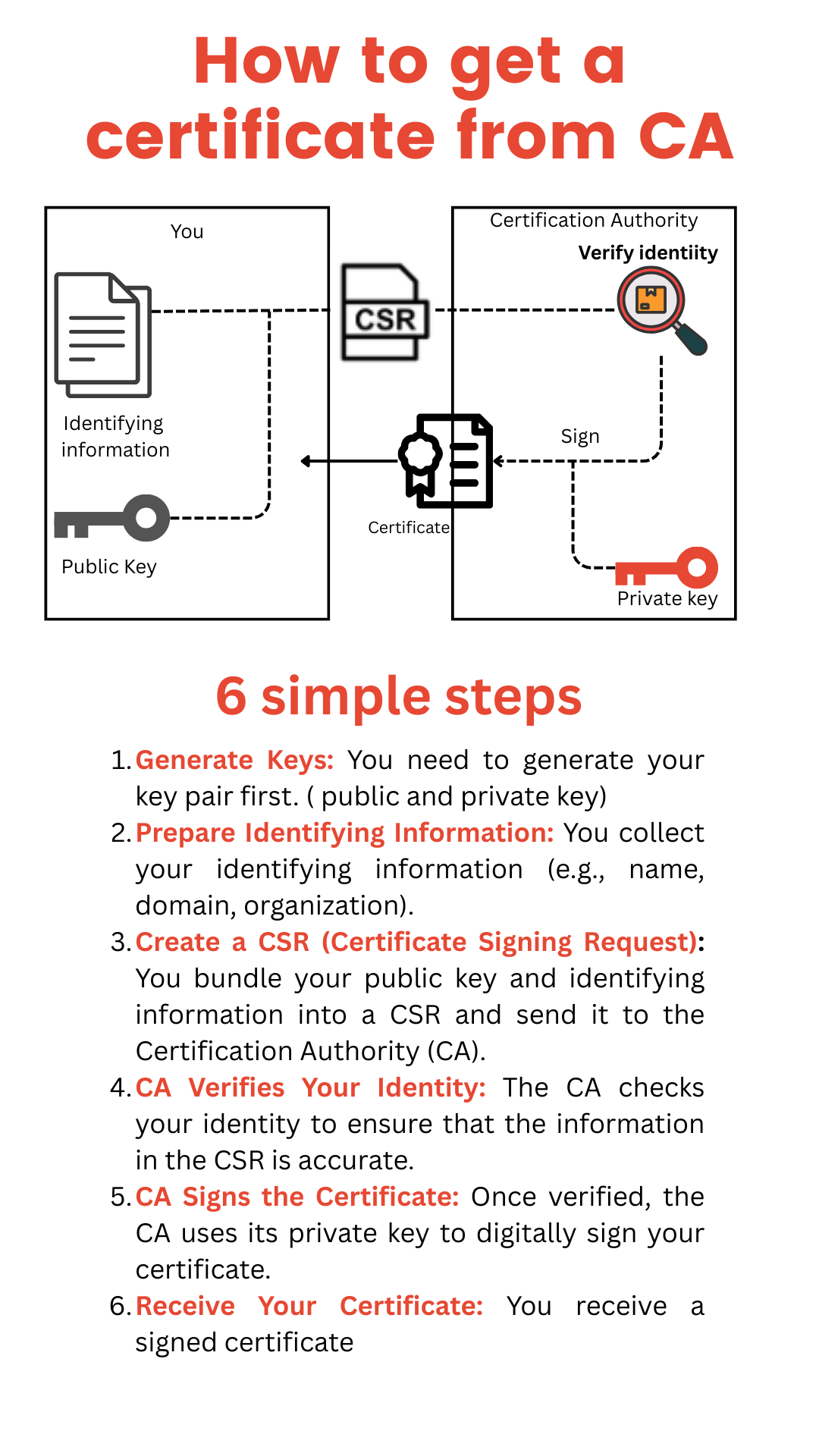
Think of a CA as the passport office of the internet:
You apply for a digital certificate.
They verify your identity.
If everything checks out, they issue the certificate.
You can now prove it’s you
What’s in a Digital Certificate?
I have repeatedly used the term “Digital certificate” and I can imagine if you’re new to this topic, you are a bit confused.
A digital certificate is nothing else than an electronic document used to prove the ownership of a public key. It basically allows others to verify that you are who you say you are, because your identity has been verified by a trusted organization.
A digital certificate typically includes:
The public key
The owner’s identity (e.g., domain name or organization name)
The issuer’s information (the Certificate Authority)
The digital signature of the Certificate Authority (CA)
The expiration date
When you visit a secure website (HTTPS), your browser checks the site’s certificate.
If it’s signed by a trusted CA, you get that green padlock.
Why do we need CAs?
Now, we are familiar with digital certificates, and we know how to obtain one. But why is it so important in the first place? Why do we even need them.
Here is why:
1. They Verify Identities
CAs make sure that the organization or person requesting a digital certificate is legitimate. For example, if a website says it's yourbank.com, the CA checks that it truly belongs to your bank and not an attacker pretending to be your bank.
2. They Issue Trusted Digital Certificates
Once verified, the CA issues a digital certificate that includes the organization’s public key. Because browsers and operating systems trust the CA, they also trust the certificate issued by them.
3. They Enable Encrypted, Authenticated Communication
With certificates issued by CAs, you can:
Use HTTPS for secure websites
Encrypt emails or files
Digitally sign software or documents to prove it hasn’t been tampered with
4. They Help Prevent Man-in-the-Middle Attacks
Without trusted CAs, anyone could create a fake website or spoof communications. CAs ensure that you're connecting to the real person or service, not an attacker in the middle.
Examples of Well-Known CAs
DigiCert
Let's Encrypt
Sectigo
GlobalSign
Entrust
Conclusion
A Certification Authority (CA) is like the passport office of the internet — it checks your identity and gives you a digital certificate that proves you are who you say you are. This certificate helps others trust you, enables secure communication, and stops attackers from pretending to be you.
Without CAs, online trust would fall apart. But how exactly do we know which certificates to trust in the first place? That’s where the chain of trust comes in, and that’s what we’ll take a look at next.
📘 Must-know concept for the ISC2 CC exam and anyone learning Cybersecurity Basics.
Great summary Ty!